

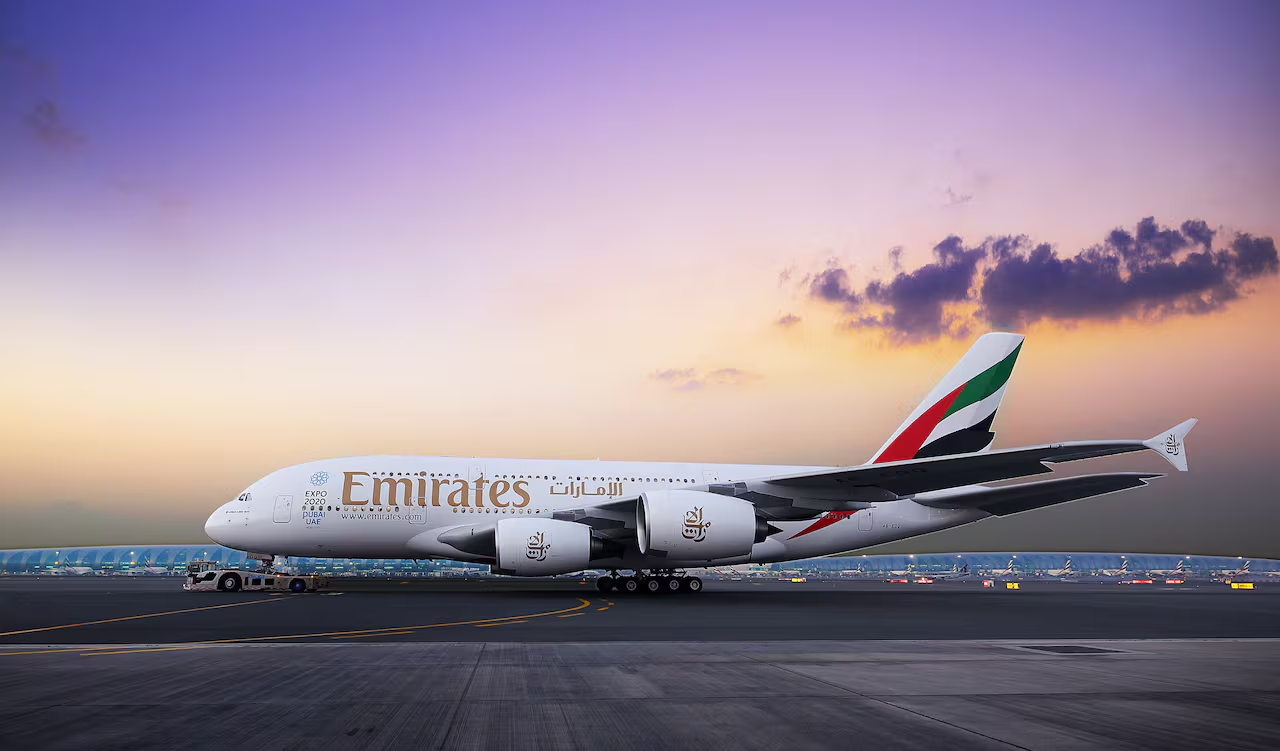


The United Arab Emirates (UAE) has officially lifted temporary airspace restrictions, bringing major relief to travelers, airlines, and the tourism industry across the Gulf region. The reopening of UAE airspace is expected to significantly improve international connectivity, especially on popular India-Gulf routes that experienced disruptions during recent regional tensions. (ETTravelWorld.com)
The move marks an important milestone for Middle East aviation recovery in 2026. Airlines including Emirates, Etihad Airways, Air India, IndiGo, Air India Express, flydubai, and Qatar Airways are gradually increasing operations as regional air travel returns to normal. (Diplomacyindia.com)
For travelers flying between India and the Gulf, the easing of restrictions means improved schedules, reduced delays, more flight availability, and better travel convenience.
For more travel news and aviation updates, visit Planet Earth Holidays Blog
UAE Airspace Returns to Normal Operations
The UAE General Civil Aviation Authority (GCAA) confirmed that all air navigation operations within UAE airspace have returned to normal status following a comprehensive review of operational and security conditions. Temporary precautionary measures introduced during the regional conflict period have now been lifted. (Al Jazeera)
The reopening comes after months of disruptions caused by geopolitical tensions involving Iran, Israel, and the broader Middle East region. Several Gulf countries had implemented temporary flight restrictions and partial airspace closures to ensure passenger safety. (euronews)
Dubai and Abu Dhabi, which serve as two of the world’s busiest aviation hubs, were among the most affected airports during the disruption period. However, with restrictions now removed, airlines are rapidly restoring operations and increasing passenger capacity. (Reuters)
More Flights Operating Between India and the Gulf


One of the biggest benefits of the reopening is the improvement in India-Gulf connectivity. Flights are now operating more frequently between major Indian cities and Gulf destinations including Dubai, Abu Dhabi, Sharjah, Doha, Muscat, Kuwait City, and Bahrain. (Diplomacyindia.com)
Airlines currently expanding or resuming services include:
- Emirates
- Etihad Airways
- flydubai
- Air India
- Air India Express
- IndiGo
- Qatar Airways
- Kuwait Airways
- Gulf Air
These carriers are gradually restoring schedules that were affected earlier by regional airspace restrictions. (The Columns)
Flights from Saudi Arabia and Oman are also operating normally, while airspace in Qatar and Iran remains partially open with limited routing restrictions still in place. (Diplomacyindia.com)
The increased availability of flights is expected to reduce airfare volatility and improve travel options for passengers traveling for tourism, business, employment, education, and family visits.
Major Relief for Indian Travelers
The Gulf region remains one of the most important international travel markets for Indian travelers. Millions of Indians travel every year between India and Gulf countries for work, tourism, pilgrimage, and family-related travel.
The reopening of UAE airspace provides several benefits for Indian travelers, including:
- More direct flights
- Reduced layovers and rerouting
- Lower travel disruptions
- Better airline schedules
- Increased seat availability
- Improved cargo and baggage movement
Travel agents and airlines expect demand to rise significantly during the upcoming summer and festive travel seasons as passenger confidence returns. (Reuters)
Popular Indian departure cities expected to see increased Gulf connectivity include:
- Kochi
- Delhi
- Mumbai
- Chennai
- Bengaluru
- Hyderabad
- Kozhikode
- Thiruvananthapuram
Kerala, in particular, has strong travel demand to UAE destinations due to its large expatriate population and tourism connections.
Dubai and Abu Dhabi Airports Scaling Up Operations


Dubai Airports CEO Paul Griffiths recently stated that airport authorities are actively scaling up operations following the full restoration of UAE airspace. Dubai International Airport (DXB), one of the world’s busiest international airports, is gradually increasing flight movements based on regional routing capacity. (Reuters)
Despite earlier disruptions, Dubai Airports handled millions of passengers and thousands of aircraft movements during the restriction period. Travel demand through Dubai has remained strong, particularly for Europe-Asia transit routes. (Reuters)
Abu Dhabi’s Etihad Airways has also resumed normal departure schedules after previously suspending operations during periods of heightened regional tension. (euronews)
The UAE’s aviation recovery is being closely watched by the global travel industry because Dubai and Abu Dhabi serve as major global transit hubs connecting Asia, Europe, Africa, and North America.
Impact on Tourism and Travel Industry
The reopening of Gulf airspace is expected to significantly boost tourism and hospitality across the region. The UAE remains one of the world’s most visited travel destinations, attracting tourists for luxury travel, shopping, entertainment, beaches, business events, and cultural experiences.
Tourism sectors expected to benefit include:
- Leisure tourism
- Business travel
- MICE tourism
- Medical tourism
- Family travel
- Religious tourism
Hotels, tour operators, airlines, and travel agencies are already witnessing increasing booking inquiries as flight schedules stabilize.
Dubai’s tourism industry, which heavily depends on international arrivals and transit travelers, is expected to see strong recovery momentum throughout 2026. (euronews)
Regional Airspace Situation
While the UAE has fully reopened its airspace, some neighboring countries continue to operate under partial restrictions.
Current regional aviation status includes:
- UAE – Fully open
- Saudi Arabia – Fully operational
- Oman – Fully operational
- Kuwait – Open
- Bahrain – Open
- Qatar – Partially open
- Iran – Limited operations
- Iraq – Limited operations
Authorities continue monitoring regional developments and issuing travel advisories where necessary. (Diplomacyindia.com)
Travelers are advised to regularly check airline updates and official government advisories before departure.
Positive Outlook for Gulf Aviation

The reopening of UAE airspace signals a strong recovery for Gulf aviation after months of uncertainty and operational disruptions. Industry experts believe the restoration of normal operations will help stabilize airline schedules, improve tourism growth, and strengthen regional trade and connectivity.
The Gulf region continues to play a critical role in global aviation due to its strategic location connecting Europe, Asia, and Africa. Major airlines such as Emirates, Etihad, Qatar Airways, and flydubai remain central to global transit travel networks.
With passenger demand rising steadily, airlines are expected to add more routes, increase flight frequencies, and introduce additional capacity in the coming months. (Reuters)
Final Thoughts
The UAE’s decision to lift airspace curbs and restore normal flight operations marks a major step forward for Middle East aviation and international travel recovery in 2026. For travelers between India and the Gulf, the reopening brings greater convenience, smoother travel experiences, and expanded flight options. (ETTravelWorld.com)
As airlines continue scaling up services across the region, travelers can expect improved connectivity, increased tourism opportunities, and stronger travel demand throughout the year.
For more latest travel blogs, aviation news, visa updates, and holiday inspiration, visit Planet Earth Holidays Blog.
0 Comment